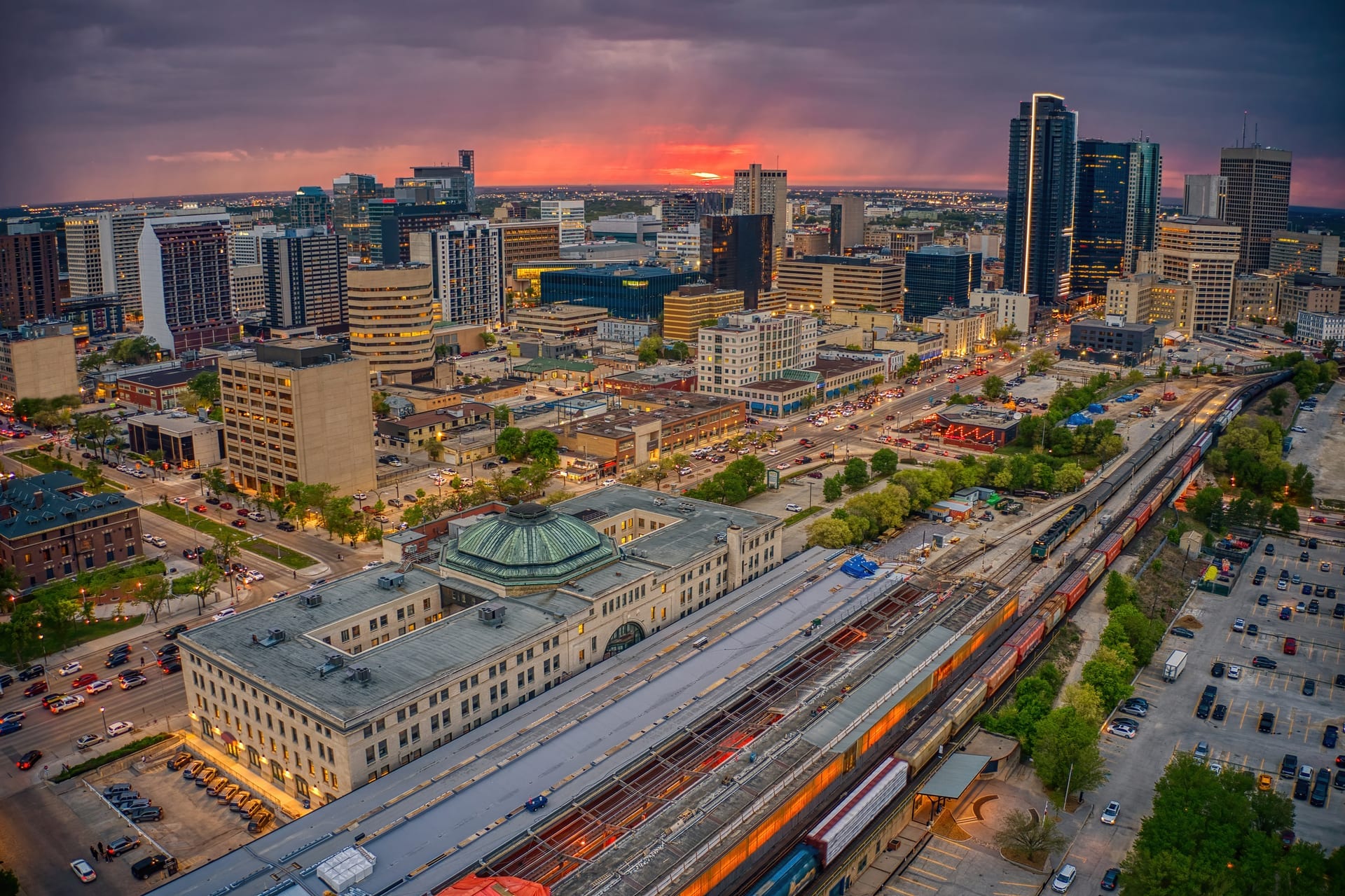
Winnipeg is the capital of Manitoba and one of the most authentically multicultural cities in Canada. Home to the University of Manitoba, the University of Winnipeg, Red River College Polytechnic (RRC Polytech), and Canadian Mennonite University, it hosts a student population of over 45,000 and offers a quality of life that rewards students who look past the winters to find what makes the city genuinely exceptional.
Student housing near the University of Manitoba is concentrated in the Fort Richmond and St. Vital neighbourhoods south of campus, while University of Winnipeg students tend to find housing in the Exchange District, Downtown, and West End neighbourhoods close to the downtown campus. Purpose-built student housing in both locations offers all-inclusive rates and professional management — both valuable in a city where winter heating costs and the complexity of private rentals can create friction for students new to independent living.
Winnipeg's most obvious advantage for students is affordability. Rents are significantly lower than in any of the major Canadian cities to the east or west, and the cost of living across groceries, transit, and entertainment is among the lowest of any major student city in Canada. For students watching their budget closely, Winnipeg allows a quality of life that simply isn't achievable on the same income in Toronto or Vancouver.
The University of Manitoba is a comprehensive research university with particular strengths in medicine (the Rady Faculty of Health Sciences), engineering, law, and Indigenous studies. The National Centre for Truth and Reconciliation is located on the U of M campus, and its presence gives the university a unique role in Canadian public life. Students interested in health, law, and social policy will find the academic environment at U of M substantive and well-connected.
Winnipeg's Indigenous population is one of the largest of any Canadian city, and that cultural presence shapes the food, arts, and community life of the city in meaningful ways. The North End neighbourhoods, the Cultural Village at The Forks, and the Indigenous arts scene along Main Street reflect a cultural vitality that is part of what makes Winnipeg distinct among Canadian cities.
The Exchange District, adjacent to the University of Winnipeg campus, is a beautifully preserved neighbourhood of late 19th-century warehouses converted into galleries, restaurants, music venues, and studios. It is one of the most architecturally striking and culturally interesting urban neighbourhoods in Canada, and the fact that students at UW can walk to it directly is a genuine perk of that campus.
Winters in Winnipeg are among the most intense in Canada. Average January temperatures hover around -16°C, and windchill can push the feels-like temperature well below -30°C. Students from Southern Ontario or British Columbia often experience genuine culture shock in their first January. The right gear — parka, insulated boots, balaclava — is not optional; it's basic survival equipment. That said, Winnipeggers take enormous pride in their winter resilience, and once you're equipped, the city's indoor social infrastructure and festival calendar (including Festival du Voyageur) make the season far more enjoyable than it looks from outside.
For students looking for student housing in Winnipeg near the University of Manitoba or the University of Winnipeg, all-inclusive purpose-built housing is particularly practical given the heating demands of Manitoba winters. Canadian Student Living's communities in Winnipeg are designed for students who want proximity to campus, professional management, and the social infrastructure of a dedicated student community.